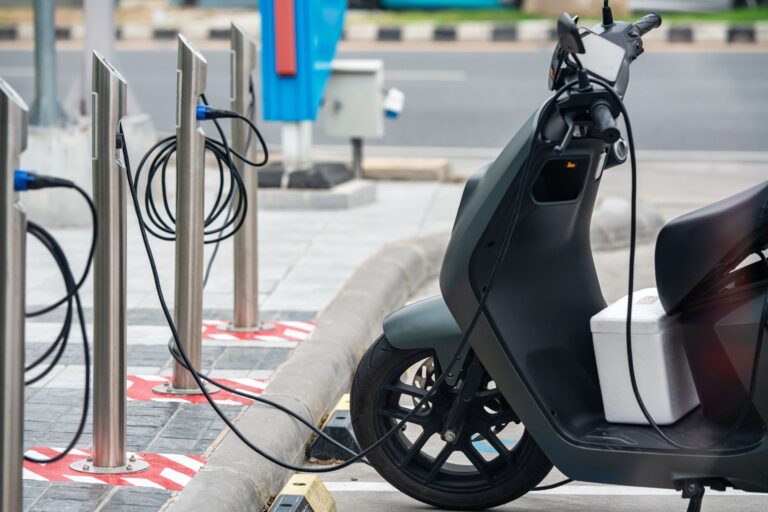

Fire Prevention Week 2026 is October 4-10, and this year’s theme, “Charge into Fire Safety™: Safe Charging Is a Superpower,” focuses on lithium-ion battery safety.
Lithium-ion batteries are now common throughout commercial buildings. They power laptops, phones, tools, cleaning equipment, e-bikes, e-scooters, and many other devices. While these batteries are generally safe when used properly, damaged batteries or improper charging can create a serious fire hazard.
Fire Prevention Week is a good opportunity to take a closer look at where and how battery-powered equipment is being stored and charged in your facility.
Where Is Lithium-Ion Battery Charging Happening?
Charging often happens wherever a convenient outlet is available, including locations that may not have been intended for that purpose.
Building teams should look for:
- E-bikes or scooters charging near building exits
- Devices or cords obstructing egress paths
- Batteries charging near combustible storage
- Visibly damaged batteries
- Unapproved or incompatible chargers
- Extension cords or power strips being used as permanent charging stations
The Massachusetts State Fire Marshal’s guidance is to store e-bikes and scooters outdoors if possible. If they’re indoors, keep them away from doors, windows and stairways. They recommend only using the manufacturer’s charger, plugging it straight into the wall without an extension cord, and and never leaving them charging unattended. This is similar to the language in the current version of NFPA 1 and will likely be adopted in the next edition of the Massachusetts Fire Code.
Indoor Storage
Before establishing or expanding an indoor battery storage or charging area, building owners should have the proposed use reviewed by a qualified fire protection professional. Lithium-ion batteries can introduce hazards that differ from those associated with the space’s previous use. The review should consider battery type and quantity, storage and charging arrangements, nearby combustibles, exit access, and the adequacy of existing fire protection systems. A room previously used for general storage should not automatically be assumed suitable for battery charging.
Know the Lithium-Ion Battery Warning Signs
A failing lithium-ion battery may show warning signs such as excessive heat, swelling, leaking, unusual odors, smoke, or unusual sounds. Building staff should know how to recognize these conditions and who to contact if damaged equipment is discovered. Damaged lithium-ion batteries should also not be placed in ordinary trash or recycling containers.
A Good Time to Review Building Procedures
Fire Prevention Week is a useful reminder to review actual conditions within the building.
Walk the property. Talk with tenants and maintenance staff. Identify where battery-powered equipment is being charged and stored. Confirm that exit routes remain clear and that employees know how to recognize a damaged battery.
For facilities with significant battery-powered equipment, consider addressing storage and charging hazards in the building’s Emergency Action Plan. During construction or renovation, these hazards should be considered in the project’s NFPA 241 construction fire safety program.
Jigsaw Life Safety assists building owners, property managers, contractors, and institutions with fire and life safety code consulting, emergency planning, NFPA 241 compliance, and related fire protection programs.
For assistance with your facility’s fire and life safety needs, contact Jigsaw Life Safety at 617-351-9600 or support@jigsawlifesafety.com.